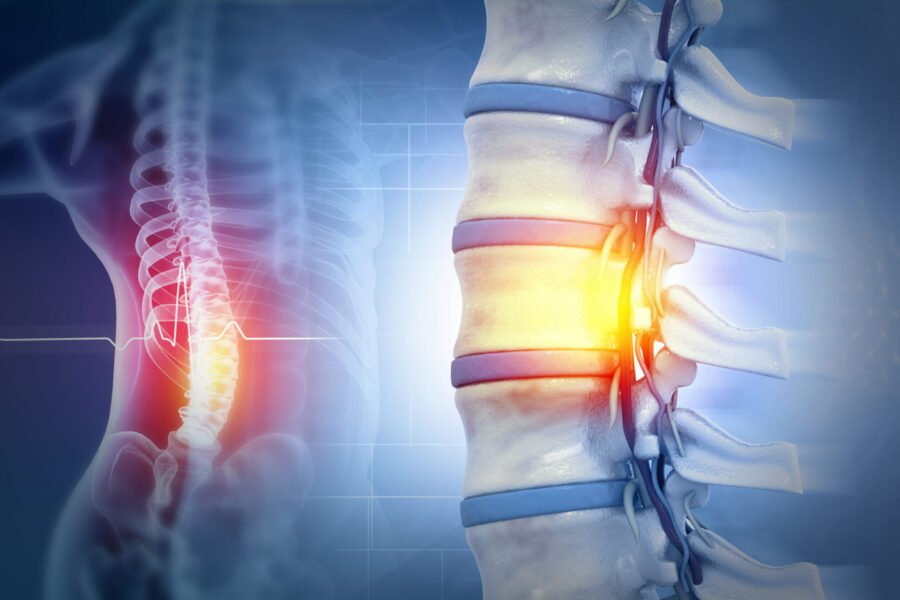
Researchers at Texas A&M University have identified a specific group of neurons that can help re‑activate leg movement after spinal cord injury, offering new insight into how walking might be restored even when normal brain‑to‑spinal pathways are damaged.
What The Researchers Discovered
In a study published in late March 2026, scientists found that a small population of spinal neurons—known as excitatory interneurons—plays a critical role in initiating leg movement. These neurons appear to act as a kind of “starter circuit” for walking. When activated, they can jump‑start rhythmic leg motion even after injury has disrupted signals from the brain.
Using advanced neural tracing and stimulation techniques in laboratory models, the researchers showed that activating these neurons helped restore coordinated leg movement. Importantly, the neurons worked by re‑engaging existing spinal walking circuits, rather than bypassing them entirely.
Why This Matters
Walking is controlled by complex networks within the spinal cord, often called central pattern generators. After a spinal cord injury, these networks may still exist, but they become inactive because communication with the brain is lost. This study shows that targeting the right neurons could wake those networks back up.
That’s a major shift from approaches that focus only on muscle stimulation or mechanical assistance. Instead, this research suggests that precise neural activation could restore more natural, coordinated movement.
Implications for Future Treatments
While the work is still at the research stage, it opens the door to future therapies that combine:
- Targeted neural stimulation
- Rehabilitation and gait training
- Assistive or wearable technologies
By focusing on the spinal cord’s own walking circuitry, future treatments may help people with spinal cord injuries regain meaningful, functional leg movement, not just isolated muscle contractions.
Looking Ahead
The Texas A&M team plans to continue studying how these neurons interact with other spinal circuits and how the findings could eventually translate into human therapies. While more research is needed, this study represents an important step toward restoring walking after paralysis. In the meantime, a supported walk station like WalkPort lets people with spinal cord injury practice supported walking every day.
📎 Source
Texas A&M University, March 30, 2026
“Study identifies key neurons that can jump‑start leg movement after spinal cord injury”
https://stories.tamu.edu/news/2026/03/30/study-identifies-key-neurons-that-can-jump-start-leg-movement-after-spinal-cord-injury/